
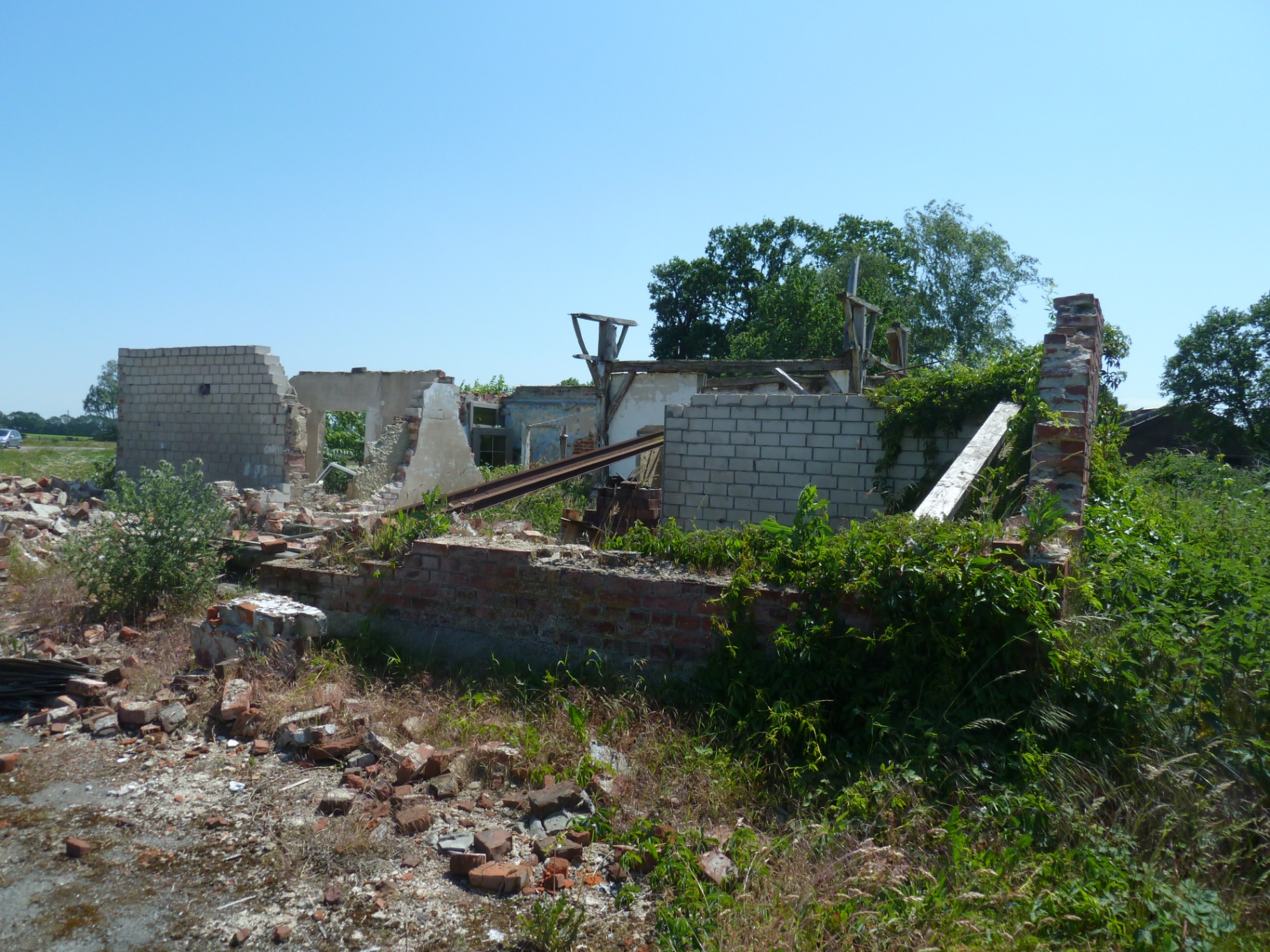
A vision that must no longer remain hidden.
About economic homelessness, broken families, and the place where dignity is rebuilt.
Homelessness in the Netherlands is shocking. And despite all political plans, targets, and promises, we do not believe the problem will become smaller in the years ahead.
The government says it aims to end homelessness by 2030. But reality tells a different story. Housing is becoming scarcer and more expensive. More and more people are getting financially stuck. Families break under debt, bureaucracy, divorce, loss of income, and years of uncertainty. Once someone loses their home, they discover how quickly all other certainties can fall away.
The official figures only tell part of the story. In the Netherlands, it is estimated that there are about 100,000 homeless people. Even that number is probably cautious, because a large part of this group remains invisible.
Not every homeless person sleeps under a bridge.
Some sleep in a car, tent, or caravan. Others move from couch to couch, live temporarily with family, or stay in holiday parks out of necessity. Families are spread across different addresses. People disappear from sight, no longer register anywhere, and therefore barely appear in statistics. The government has even admitted that young people under 18 and elderly over 65 are not represented in any statistic at all.
But the fact that they are not counted does not mean they do not exist. The actual number will therefore be much higher than assumed.
Homelessness has many faces
When homelessness is discussed, it often concerns people with addiction problems, psychiatric issues, or a labor migrant background. For these groups, however inadequate at times, there are recognizable forms of shelter and specialized care.
In addition, there is a large group that almost always falls through all the cracks: the economically homeless.
These are people who lose their home due to job loss, rent arrears, debt, bankruptcy, high housing costs, conflict with agencies, or because their temporary accommodation ends.
They do not always have a psychiatric diagnosis. They are not necessarily addicted. They do not automatically fit into an existing care trajectory.
That is why they are quickly labeled "self-reliant."
But without a home, almost no one remains self-reliant for long.
How do you keep a job when you do not know where you will sleep that night? How do you recover financially when you have no stable place for your paperwork? How do you care for your children when you do not have a safe address? How do you rebuild your life when every day is entirely about survival? Because there is one thing that slowly but surely begins to erode: hope.
The term self-reliant is too often used as a reason not to offer help.
Families under fire
We live in a time when darkness is acting more and more openly.
The Bible teaches us that our struggle is not only against people and systems, but against spiritual powers. Satan comes to steal, to kill, and to destroy. One of his main goals is to weaken and tear apart families.
When a family comes under financial pressure, a chain reaction often follows. Stress increases. Relationships are damaged. Debts grow. The home is lost. Parents lose overview and children get caught in the middle.
Sometimes children are then removed from their parents, not because there is no love, but because there is no stable home anymore.
We find that unacceptable.
Poverty and housing shortage must not automatically lead to the breaking up of a family. Where parents are willing and able to take responsibility, everything must be done to receive them together with their children, guide them, and give them new perspective.
A society that first lets a family sink and then concludes that the family no longer functions, itself bears a serious share in that breakdown.
We do not want to resign ourselves to that.
Administratively disappeared
We know from personal experience how harsh and inhumane systems can be. Once someone no longer has a fixed address, they can also disappear administratively from view. In practice, a municipality may send a letter to the address where the person no longer lives. If there is no response, the person is deregistered as a resident of the Netherlands, into the Non-Resident Registration. On paper, it then appears the person has left the Netherlands. So much for clean statistics.
In reality, that person may simply still be in the Netherlands, wandering from place to place, sleeping in a car or relying on friends.
The consequences are enormous. Mail no longer arrives. Applications get stuck. Access to help becomes more complicated. The person disappears from systems and statistics, while their need only grows.
We do not speak about this theoretically. We know the despair, the survival mode, and the loss of trust that can accompany it.
That is precisely why we carry this vision.
Not dependency, but restoration
LoveUnlimited wants to focus especially on the economically homeless. Not because other groups are less important, but because this group often has almost nowhere to turn. Our vision is not to endlessly shelter people and make them dependent on care. Our goal is the opposite.
We want to help people become independent again. To restore dignity. To gain overview. To take responsibility.
For that, a temporary safe place is sometimes needed. And by temporary we mean a fixed place, where one can stay until there is independent housing again.
A place where people can find rest. Where families, where possible, can stay together. Where paperwork can be organized, debts can be addressed, and a realistic trajectory toward work, income, and housing can be built.
A place where people are not reduced to a file, a case, or a registration number.
But also no place without clear boundaries.
Restoration requires responsibility, commitment, and willingness to take steps. Love does not mean everything is without obligation. True help takes a person seriously enough not to keep them small, passive, and dependent.
We do not want to teach people to live on shelter.
We want to help them live without shelter again.
Jesus is not a side issue
This vision does not come from a social buzzword or political program.
Jesus Christ is our driving force.
He saw people whom others no longer saw. He touched those who had been placed outside society. He restored not only bodies, but also dignity, identity, and future. That is why we do not want a project in which Jesus is merely mentioned in a brochure or kept at the edge of the program. He must be the foundation.
That does not mean everyone who receives help must first meet spiritual conditions. Help must be given sincerely, professionally, and without manipulation. But we will also not be ashamed of the source of our compassion.
We believe that true restoration involves more than shelter.
A person needs hope. Truth. Forgiveness. The realization that they are not written off and that their life still has value and purpose.
That is why we want to act practically and stand with people spiritually.
Professional and transparent
If this vision becomes reality, it must be done professionally. Good intentions alone are not enough. Working with vulnerable people requires expertise, clear responsibilities, financial transparency, careful governance, safe procedures, and clear boundaries. We do not want to start a thoughtless initiative that runs entirely on enthusiasm and then gets stuck. That is why we are sharing this vision publicly now.
We are looking for people who recognize this. People who have long carried a similar desire but have not yet been able to give it concrete shape. People who, while reading this, know: I need to be involved in this.
We think of social workers, debt counselors, trajectory coaches, family counselors, people with lived experience, lawyers, administrators, entrepreneurs, fundraisers, and people with knowledge of housing, care, and reintegration.
But also intercessors, builders, and people who have relevant contacts, resources, or locations.
Not everyone needs to be able to do everything.
But together we must be able to develop a responsible, professional, and transparent action plan.
Who will carry this vision with us?
Perhaps you have carried a similar vision for years. Perhaps you know from personal experience how quickly someone can lose everything. Perhaps you work daily with people who have nowhere to turn. Perhaps you have expertise that is exactly what this initiative needs. Or perhaps God has long put something on your heart and you recognize this call as confirmation.
Then we would love to connect with you.
In this phase, we are looking for people who are willing to think, pray, and take responsibility. People who understand that compassion and professionalism do not exclude each other. People who believe that families must be protected, that dignity can be restored, and that economic homelessness does not have to be the end of the line.
We cannot wait until political ideals ever become reality. There are people who need solid ground now. Perhaps this is the moment to lay that ground together.
Do you carry this vision with us?
Get in touch with us — as a thinker, intercessor, builder, or professional. Together we lay the first stones.
Get in touch →